




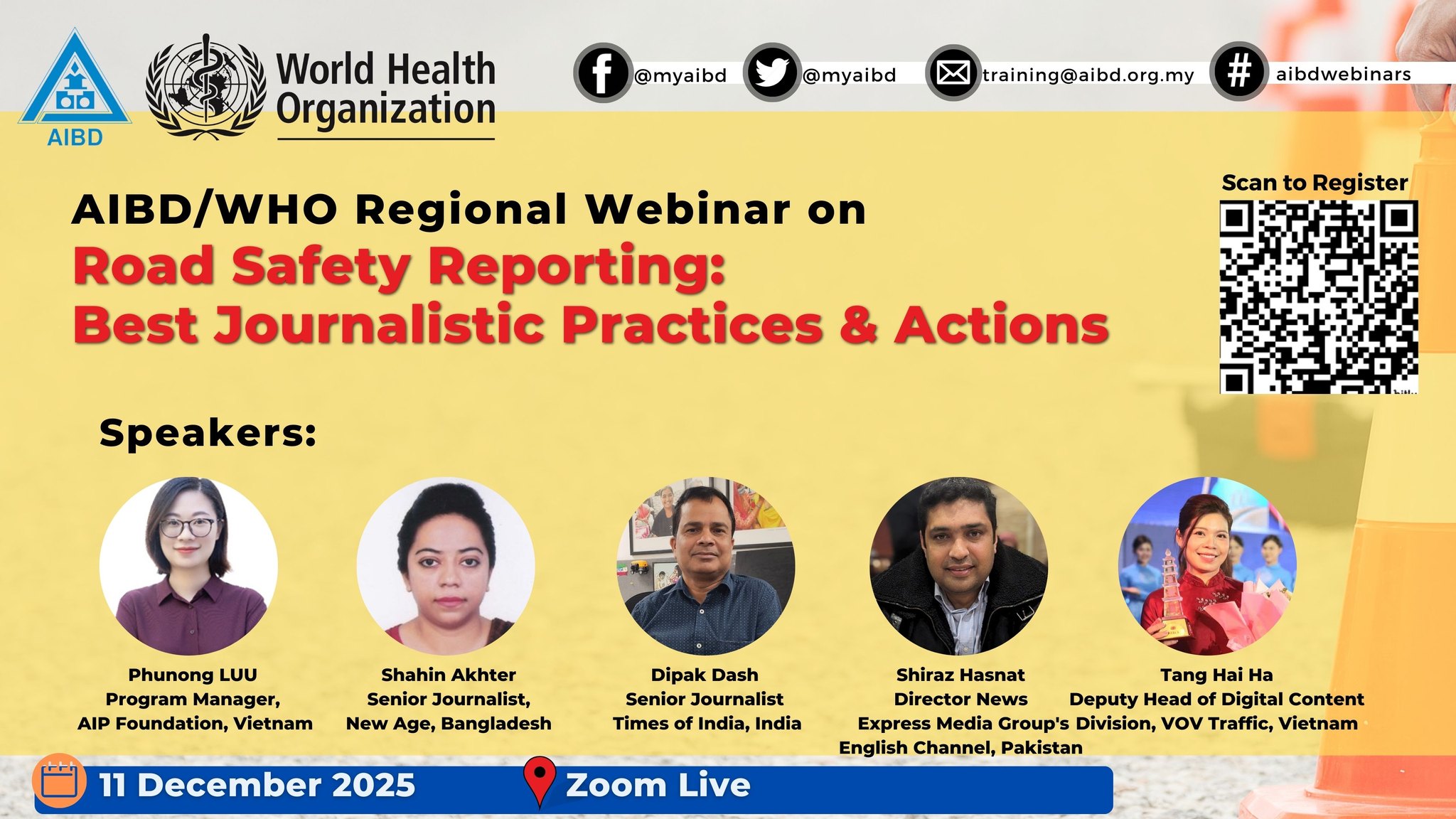
Regional media professionals from across Asia gathered virtually on Dec. 11 to address one of the region’s most pressing public health crises: road traffic fatalities. The webinar, a joint initiative by AIBD and WHO marked a critical step in the ongoing Road Safety Reporting series.
The session, aimed to equip journalists with the tools to move beyond “accident” reporting and toward data-driven storytelling that emphasizes prevention and policy reform.
“Road safety is not just a transport issue; it is a developmental and health issue,” organizers noted during the welcome address. The collaboration highlighted a growing recognition that media coverage plays a pivotal role in shaping public perception and holding authorities accountable for infrastructure and enforcement.
The agenda featured a diverse panel of experts and veteran journalists who shared case studies from Vietnam, Bangladesh, India, and Pakistan.
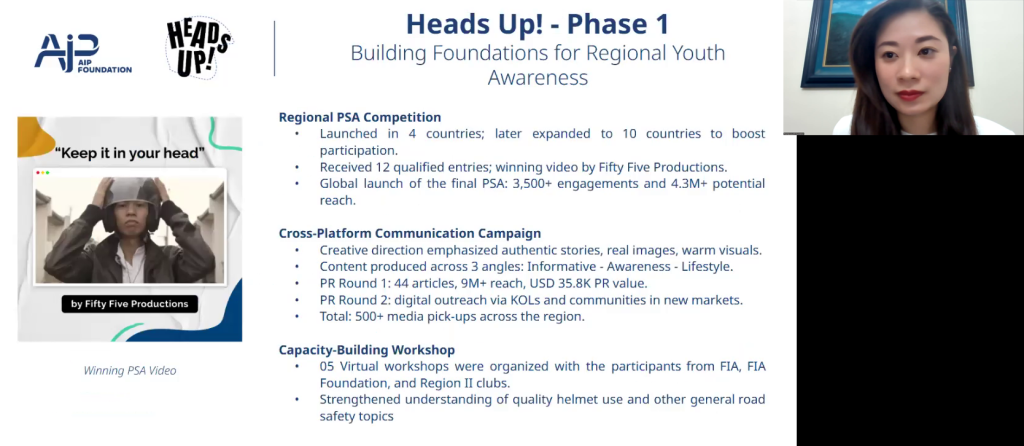
Phuong Luu, Programme Manager at the AIP Foundation in Vietnam, opened the presentations by highlighting the success of grassroots advocacy and the importance of helmet safety and school-zone speed limits. Her insights underscored how media can support non-governmental efforts to change local legislation.
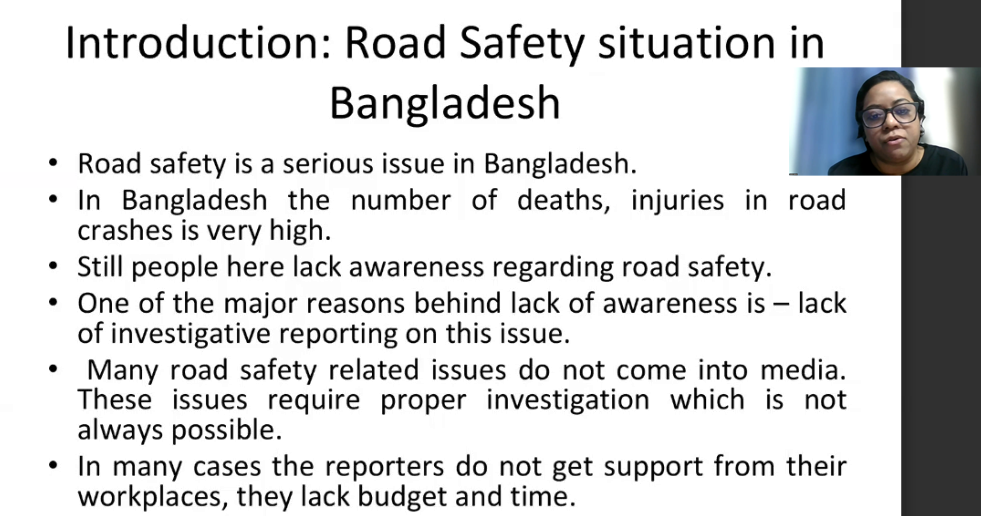
Following her, Shahin Akhtar, a senior reporter for New Age in Bangladesh, discussed the challenges of reporting in high-risk environments. Akhtar emphasized the need for journalists to investigate the systemic failures, such as poor vehicle maintenance and licensing loopholes, that lead to frequent mass-casualty incidents on highways.
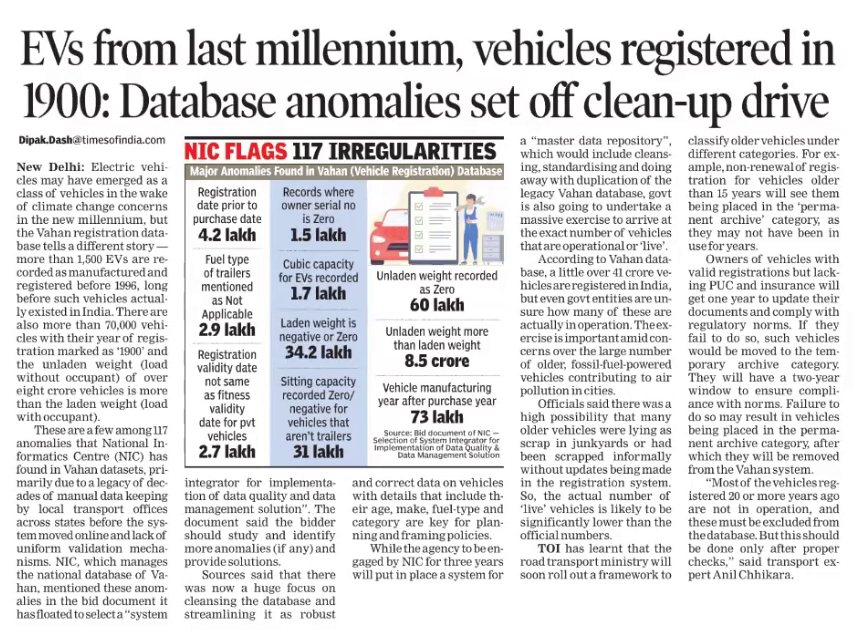
Dipak Dash, a senior reporter for the Times of India, pivoted the conversation toward the power of data. Dash showcased how analyzing government statistics can reveal “black spots”, specific road stretches with high accident rates, allowing journalists to lobby for physical interventions by the state.
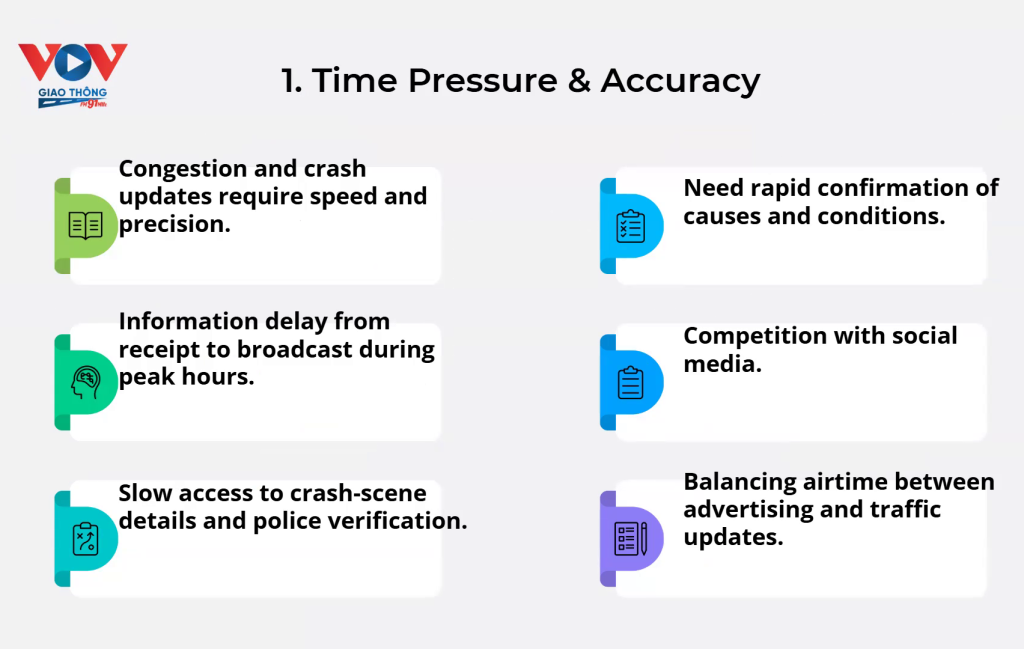
The digital evolution of reporting was addressed by Shiraz Hasnat of Pakistan’s Express Media Group and Tang Hai Ha of VOV Traffic in Vietnam. Hasnat detailed how social media and English-language news channels can mobilize younger demographics to prioritize road safety. Meanwhile, Tang Hai Ha illustrated the role of real-time digital content and radio synchronization in managing urban traffic flow and preventing congestion-related incidents.
The webinar concluded with a robust Q&A session where participants discussed the ethics of crash photography and the difficulty of obtaining transparent data from local police departments.
The event ended with a group photo of the digital participants, symbolizing a unified regional front. AIBD and WHO reaffirmed their commitment to supporting journalists as they shift the narrative from inevitable tragedy to preventable crisis.
Organizers urged the participating media professionals in attendance to use their platforms to advocate for the “Safe System” approach, focusing on safer roads, safer speeds, and safer vehicles across the Asia-Pacific region.
AIBD-WHO Webinar on Best Journalistic Practices on Road Safety Reporting
Regional media professionals from across Asia gathered virtually on Dec.
AIBD-VOV In-Country Workshop on News Reporting Begins in Buon Ma Thuot, Vietnam
The Asia-Pacific Institute for Broadcasting Development

AIBD Webinar on Democracy and Elections 2024
In 2024, the most countries in history will hold national

World Radio Awards 2024 (Registration)
Voices that transcend borders, cultures, and time Dive into a century
PNG Minister Urges Regional Joint Efforts Against Disinformation in Digital Age
The honourable Timothy Masiu, Papua New Guinea’s Minister for Information

Announcing the 48th Annual Gathering / 21st AIBD General Conference and Associated Meetings 2023
The AIBD Secretariat is pleased to announce that the 48th
Malaysia aspires to make Road Safety as the Culture by 2030
Studies of the Malaysian Institute for Road Safety Research (MIROS)
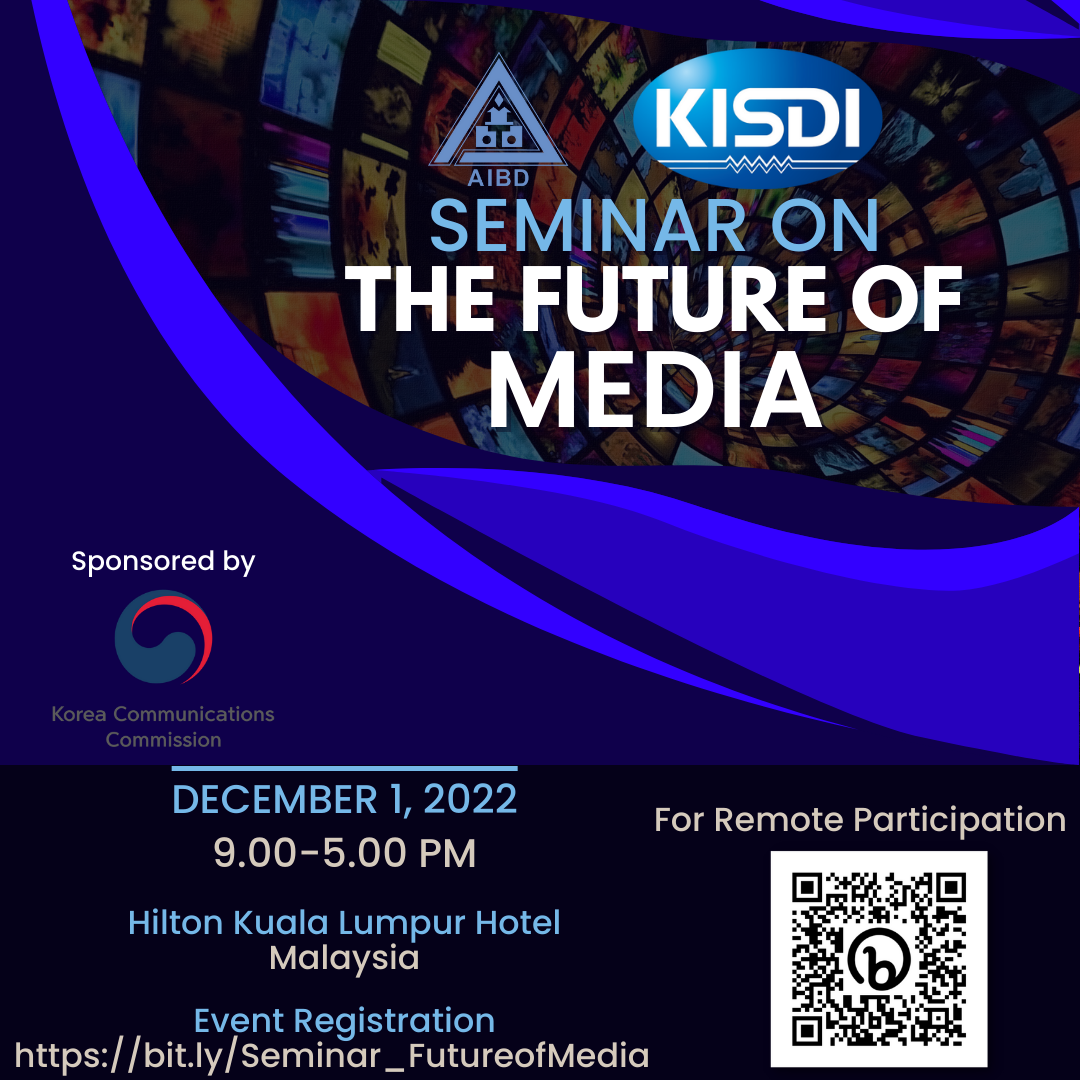
AIBD/Korea Seminar on Future of Media
On Thursday, December 1, 2022, the Asia-Pacific Institute for Broadcasting
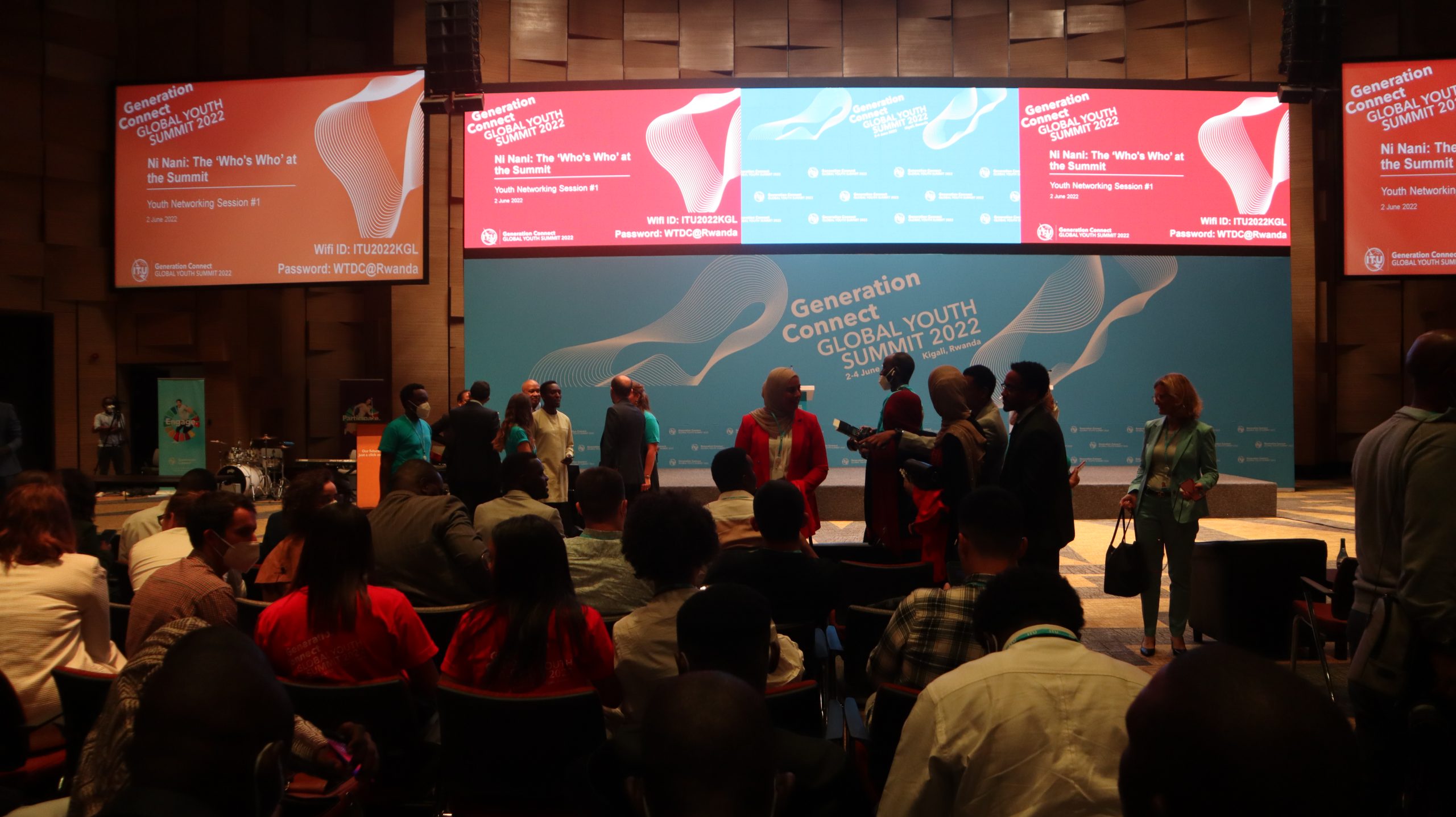
Kigali welcomes 500 Youth Leaders
Kigali's Intare Conference Arena welcomed more than 500 young people
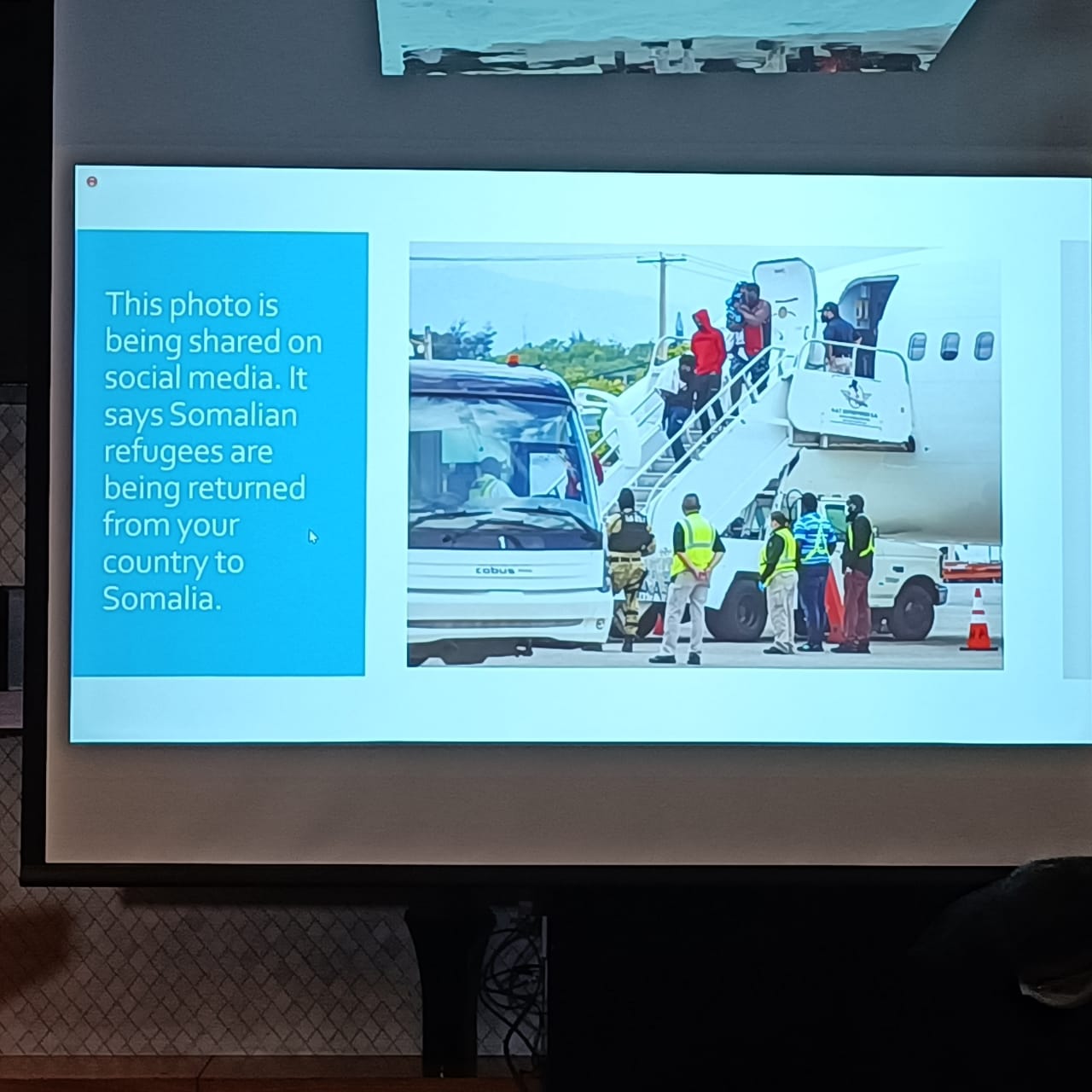
Day 3: AIBD/ILO Workshop on Women Migrant Journalism
Introducing Ms Naomi Goldsmith, Migration Specialist Media Trainer from UK.